Summer in Mississippi is hard to resist. The long days, the lake weekends, the backyard…
7 Skin Changes You Should Never Ignore
You may not notice it, but your skin changes over time.
Freckles may darken, new moles may appear, and minor blemishes often heal on their own. Because these changes are so common, it can sometimes be difficult to know what is normal—and what may need medical attention.
At Price Skin Care Clinic in Ridgeland, Mississippi, our skin care clinicians perform comprehensive skin cancer screenings for patients across the Jackson metropolitan area as part of routine preventive care. Early detection remains one of the most effective tools in protecting long-term skin health.
One of our goals during regular skin exams is to identify abnormal skin changes as early as possible. When caught early, most skin cancers are highly treatable.
“We also teach patients how to recognize changes in their skin that may require evaluation,” said Richard Price, M.D., of Price Skin Care Clinic.
In this article, we’ll review key warning signs to watch for and explain when it’s time to schedule a professional skin exam with us.
The ABCDE Rule for Identifying Suspicious Moles
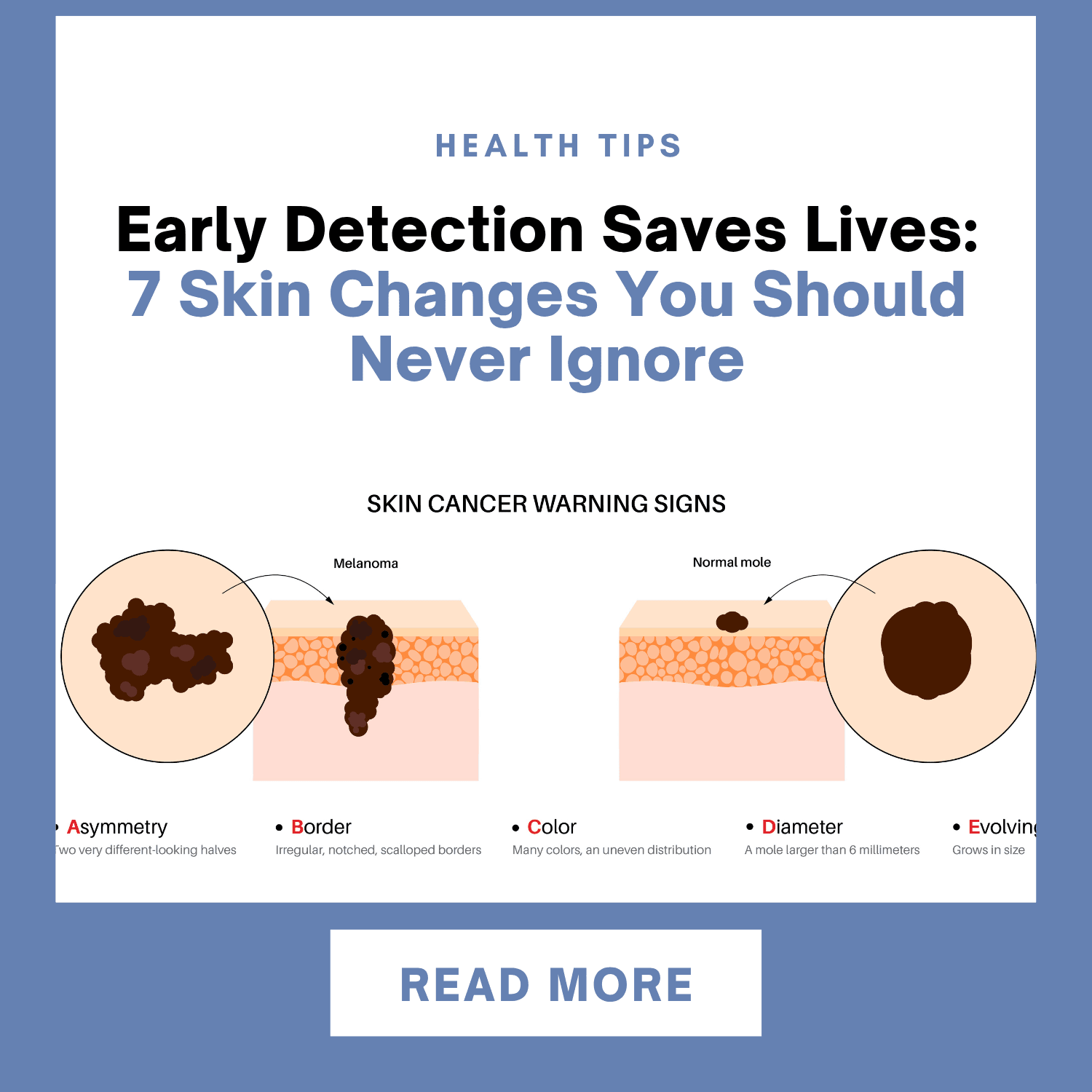
We often use a simple guide called the ABCDE rule to evaluate moles that may be concerning for melanoma, the most serious form of skin cancer.
Understanding this rule can help you recognize changes that should be evaluated by a professional.
A – Asymmetry
If one half of a mole does not match the other half, it may be asymmetric.
Benign moles are typically symmetrical, while melanoma often appears uneven.
B – Border
Watch for edges that appear irregular, ragged, notched, or blurred.
Normal moles usually have smooth, well-defined borders.
C – Color
Healthy moles are usually a single consistent color.
Moles with multiple colors—such as brown, black, red, white, or blue—may need evaluation.
D – Diameter
A general guideline is that moles larger than 6 millimeters (about the size of a pencil eraser) should be checked.
However, smaller lesions can also be concerning if they are changing.
E – Evolving
This is one of the most important warning signs.
A mole that changes in size, shape, color, or symptoms (itching or bleeding) should be evaluated.
Other Skin Changes That Should Be Checked
Not all skin cancers begin as moles. Some appear as different types of lesions or growths.
Watch for the following warning signs:
• A sore that does not heal: A spot that repeatedly scabs, bleeds, or fails to heal within a few weeks should be evaluated.
• A pearly or shiny bump: Basal cell carcinoma may appear as a small, shiny, or pearly bump on the skin.
• A rough or scaly patch: Dry, rough patches may be actinic keratoses, which can be precancerous.
• A firm red nodule: Some skin cancers appear as firm, red bumps that slowly grow over time.
• A spot that itches, burns, or becomes tender: Persistent discomfort in a lesion can sometimes signal an underlying problem.
If you notice any of these changes, it’s important to schedule a professional evaluation.
The Importance of Monthly Skin Self-Checks
In addition to yearly professional exams, we recommend monthly skin self-checks.
A self-exam only takes a few minutes and can help you notice changes early.
Check your skin in a well-lit room, including:
• Face and scalp
• Neck and shoulders
• Chest and abdomen
• Arms and hands
• Legs and feet
• Back and buttocks
Using a mirror—or asking for help with hard-to-see areas—can make the process easier.
At Price Skin Care Clinic, we encourage you to become familiar with your skin so you can quickly recognize changes.
Who Is Most at Risk for Skin Cancer?
While anyone can develop skin cancer, certain factors increase risk:
• Frequent sun exposure
• History of sunburns
• Fair skin that burns easily
• Use of tanning beds
• Many moles or unusual moles
• Family history of skin cancer
However, skin cancer can affect people of all skin tones and backgrounds, which is why routine skin exams are important for everyone.
Protecting Your Skin Every Day
Daily habits can significantly reduce your risk of skin damage and skin cancer:
☀️ Apply sunscreen daily
☀️ Wear protective clothing and hats
☀️ Avoid tanning beds
☀️ Seek shade during peak sun hours
☀️ Schedule yearly skin exams
These simple steps can make a meaningful difference in your long-term skin health.
When to Schedule a Professional Skin Exam
If you notice any unusual or changing skin spots, it’s important not to ignore them. Even small changes can sometimes indicate a developing condition.
We can evaluate the area and determine whether monitoring or treatment is needed.
Our experienced skin care providers at Price Skin Care Clinic offer comprehensive skin evaluations and personalized care to help you maintain healthy skin.
Early Detection Is the Best Protection
The message of this series is simple: early detection saves lives.
You can significantly reduce the risk of serious skin disease by combining:
• Monthly self-checks
• Annual professional skin exams
• Daily sun protection habits
If you have not had a skin exam in the past year—or if you have noticed a concerning skin change—consider scheduling an appointment with us at Price Skin Care Clinic.
Call 601.992.3996 to schedule your appointment today.
A quick exam today could protect your health for years to come.
Quick Facts: Common Questions About Skin Changes
What is the ABCDE rule?
It is a simple guideline we use to help identify moles that may be concerning for melanoma.
What does it mean if a mole is changing?
Any change in size, shape, color, or sensation (itching or bleeding) should be evaluated.
Are all skin cancers dark or black in color?
No. Skin cancers can appear as pink, red, pearly, scaly, or skin-colored lesions.
Can skin cancer appear as something other than a mole?
Yes. It may appear as sores that do not heal, scaly patches, or shiny bumps.
How often should I check my skin at home?
We generally recommend a monthly self-exam.

Related Posts